
 By IKadverts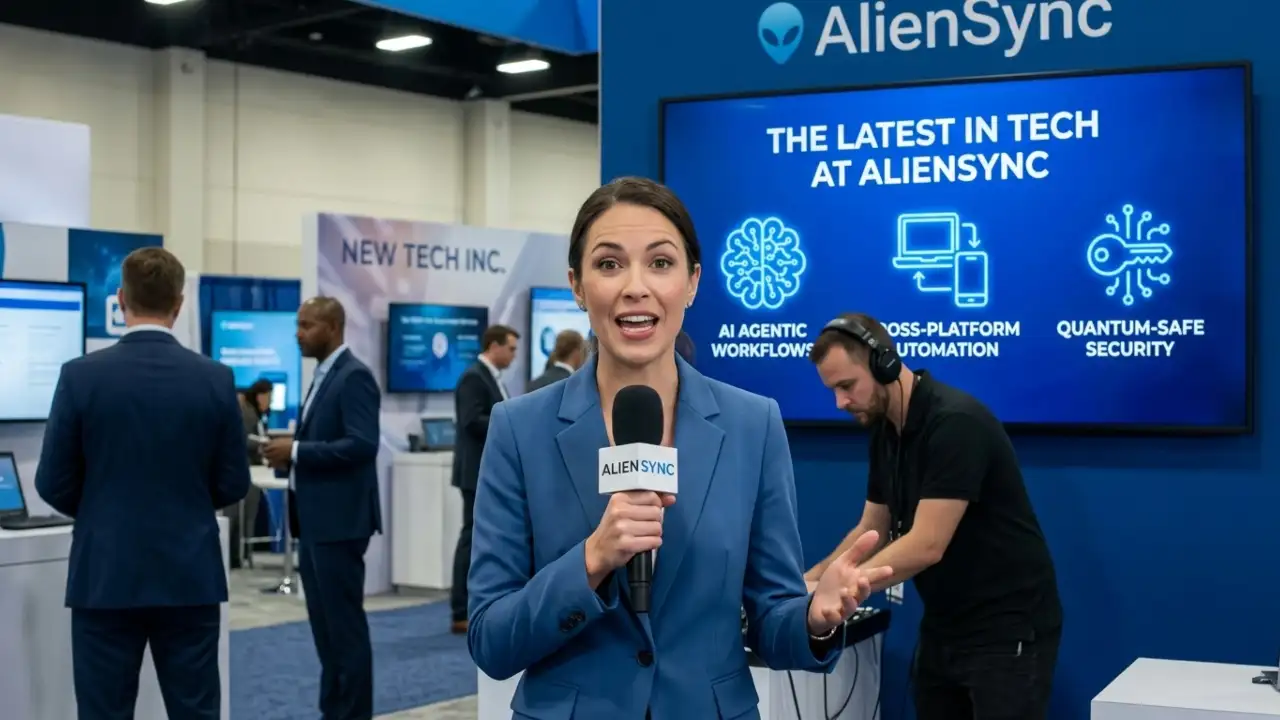
The digital landscape in 2026 demands seamless connectivity. As tech stacks grow increasingly fragmented across isolated platforms, teams spend endless hours managing disparate tools, manual data pipelines, and disconnected social channels. Exploring the latest in tech at AlienSync reveals how modern technology editorial coverage and conceptual synchronization frameworks are tackling this exact challenge.
AlienSync stands at the intersection of technology journalism and conceptual system architecture. It provides actionable analysis on artificial intelligence, cross-platform automation, quantum-safe security, and unified data workflows. Whether you evaluate software suites, build API-driven automations, or optimize multi-channel brand presence, understanding these core tech paradigms is essential.
What Drives the Tech Ecosystem at AlienSync?
AlienSync functions primarily as a technology-focused editorial hub and conceptual architecture platform. Rather than operating purely as a closed software ecosystem, its content explores how modern web architectures can bridge gaps between fragmented applications.
The core philosophy revolves around eliminating manual data duplication. Managing content, customer metrics, or application data across isolated services creates operational drag. AlienSync’s framework focuses on event-driven automation, centralized profile mapping, and standardized cross-network thread organization.
1. Artificial Intelligence and Agentic Workflows
Artificial intelligence forms a primary pillar of the latest in tech at AlienSync. While early AI tools focused on single-turn text generation, current solutions emphasize autonomous task coordination and real-time data processing.
Strategic AI Implementations Evaluated
-
Agentic Automation: Moving beyond simple rule-based triggers toward AI agents that interpret context, make decisions, and execute multi-step routines across apps.
-
AI Presentation and Media Editors: Comparative analysis of tools like Adobe Express, Gamma, Canva, and Microsoft Copilot to determine genuine workflow efficiency.
-
Contextual Localization: Leveraging natural language processing (NLP) models to adapt localized content across global markets while preserving brand tone.
In practice, integrating agentic workflows allows a single marketing prompt to automatically update CRM records, draft contextual social posts, and schedule platform-specific distribution channels.
2. Cross-Platform Synchronization Frameworks
Managing isolated digital tools consumes significant engineering and operational overhead. AlienSync’s synchronization model focuses on orchestrating data across disparate platforms.
Core Features of Modern Synchronization
| Feature | Primary Function | Workflow Benefit |
| Cross-Platform Thread IDs | Maps conversation trees across different networks using a unified thread reference. | Consolidates customer engagement metrics into a single view. |
| Per-Post Granular Control | Applies distinct access rules, audience segmentation, and permissions per update. | Reduces accidental cross-account publishing errors. |
| Media Caching Optimization | Pre-filters and caches high-resolution assets locally before API transport. | Minimizes network bandwidth and speeds up asset rendering. |
| Categorized Alert Routing | Filters platform notifications into operational categories (errors, auth, sync). | Prevents critical connection issues from being buried in noise. |
3. Quantum-Safe Security and Data Privacy
With quantum computing capabilities advancing rapidly, conventional encryption standards face long-term vulnerabilities. A significant focus within the latest in tech at AlienSync centers on post-quantum cryptography and robust security protocols.
Key Security Standards Highlighted
-
Post-Quantum Encryption Awareness: Preparing data infrastructures for lattice-based cryptographic standards to secure sensitive information against future decryption threats.
-
Event-Driven Audit Logging: Tracking system events, token handshakes, and API requests across third-party platforms to maintain complete data visibility.
-
Zero-Trust Identity Management: Enforcing granular access scopes using short-lived OAuth tokens and webhook validation to protect connected services.
Security architectures must protect data both in transit and at rest. When applications exchange credentials across public webhooks, maintaining strict permission controls prevents unauthorized access.
4. Hardware Concepts: NovaSphere, PulseWear, and SyncPoint
Beyond software and security coverage, AlienSync’s technical archive explores conceptual hardware models designed for interconnected ecosystems.
-
NovaSphere: A conceptual smart-home orchestrator engineered to unify smart household devices under an adaptive, localized AI layer.
-
PulseWear: A personal fitness tracker concept emphasizing real-time contextual recommendations over raw, unanalyzed biometric metrics.
-
SyncPoint: The underlying connectivity hardware framework designed to enable low-latency communication across local and cloud environments.
While these hardware models represent conceptual designs rather than off-the-shelf consumer products, they illustrate the growing trend toward hardware-software integration.
Practical Application: Building an Automated Workflow
To understand the real-world value of cross-platform integration, consider an e-commerce brand running multi-channel campaigns. Without synchronization, team members manually upload assets, copy product data, and track metrics across separate dashboards.
Step-by-Step Sync Workflow
-
Trigger Event: A new product goes live on an e-commerce platform (e.g., Shopify).
-
Webhook Dispatch: Webhook payloads transmit product metadata, images, and inventory counts to a central orchestration node.
-
AI Content Adaptation: An automated pipeline generates platform-tailored captions for social channels (e.g., LinkedIn, Instagram).
-
Synchronized Publishing: Content schedules automatically using designated audience controls and cross-platform thread tracking.
-
Unified Reporting: Engagement data routes back to a single CRM dashboard, providing real-time ROI tracking.
Implementing this structured pipeline cuts repetitive data entry by up to 80% and eliminates manual errors.
Evaluating AlienSync: Key Takeaways
When reviewing the latest in tech at AlienSync, it is important to distinguish between actionable editorial analysis and conceptual frameworks.
-
As an Editorial Destination: AlienSync provides in-depth comparisons, AI evaluations, cybersecurity guides, and tech trend breakdowns.
-
As a Conceptual Framework: It presents architectural models for cross-platform data synchronization, social automation, and connected smart environments.
Staying informed on these advancements empowers developers, marketers, and tech leaders to build resilient, automated digital workflows.
[…] and Socials AlienSync: The Ultimate Guide to Unified Digital Management The Latest in Tech at AlienSync: Next-Gen AI, Cross-Platform Automation, and Digital Synchronizatio… Blockchain & Crypto AlienSync: The Next Frontier of Decentralized Synergy Socials and […]